

Selecting the right belt or coupling for a mud pump is a critical decision that can significantly impact the performance, reliability, and lifespan of your equipment. As a mud pump supplier, we understand the importance of making the correct choice, and in this blog post, we'll guide you through the process.
Understanding the Role of Belts and Couplings in Mud Pumps
Mud pumps are essential components in various industries, particularly in oil and gas drilling, where they are used to circulate drilling fluid. Belts and couplings are the vital links that transmit power from the prime mover (usually an engine or an electric motor) to the mud pump. A well - chosen belt or coupling ensures efficient power transfer, reduces vibration, and prevents premature wear and tear of the pump components.
Belts in Mud Pumps
Belts are a popular choice for power transmission in mud pumps due to their flexibility and ability to absorb shocks. They come in different types, such as V - belts and synchronous belts.
V - belts are the most commonly used type in mud pumps. They have a trapezoidal cross - section and are designed to fit into V - shaped pulleys. The friction between the belt and the pulley surface allows for efficient power transmission. V - belts are relatively inexpensive, easy to install, and can tolerate some misalignment between the driving and driven pulleys. However, they may require periodic tension adjustment and can slip under heavy loads.
Synchronous belts, also known as timing belts, have teeth that mesh with corresponding teeth on the pulleys. This positive engagement ensures precise power transmission without slippage, making them suitable for applications where accurate speed control is required. Synchronous belts are often used in high - precision mud pumps or in systems where noise reduction is a priority.
Couplings in Mud Pumps
Couplings are used to connect the shafts of the prime mover and the mud pump directly. They come in various types, including rigid couplings, flexible couplings, and fluid couplings.
Rigid couplings provide a solid connection between the shafts, ensuring that they rotate in perfect alignment. They are suitable for applications where the shafts are already precisely aligned and there is minimal vibration. However, they do not tolerate misalignment well and can transmit shock loads directly to the pump, potentially causing damage.
Flexible couplings, on the other hand, can accommodate some degree of misalignment (angular, parallel, or axial) between the shafts. They use flexible elements, such as elastomers or metal bellows, to absorb shocks and vibrations. Flexible couplings are widely used in mud pumps because they can protect the pump from damage caused by misalignment and reduce the stress on the shafts.
Fluid couplings use a hydraulic fluid to transmit power between the driving and driven shafts. They provide a smooth start - up, reduce shock loads, and can protect the motor and the pump from overloading. Fluid couplings are often used in large - scale mud pump applications where high - torque transmission is required.
Factors to Consider When Selecting a Belt or Coupling for a Mud Pump
Power Requirements
The first step in selecting the right belt or coupling is to determine the power requirements of the mud pump. This includes the horsepower (HP) or kilowatts (kW) needed to drive the pump at the desired operating speed. The power rating of the belt or coupling should be higher than the actual power requirements of the pump to ensure reliable operation and prevent premature failure.
Speed and Torque
The speed and torque characteristics of the prime mover and the mud pump also play a crucial role in the selection process. Different belts and couplings have different speed and torque limitations. For example, V - belts are generally suitable for lower - to - medium - speed applications, while synchronous belts can handle higher speeds. Similarly, some couplings are better suited for high - torque applications, while others are more appropriate for low - to - medium - torque situations.

Misalignment Tolerance
In a real - world scenario, it is almost impossible to achieve perfect alignment between the shafts of the prime mover and the mud pump. Therefore, it is essential to choose a belt or coupling that can tolerate a certain degree of misalignment. Flexible couplings are the obvious choice for applications where misalignment is expected, while belts can also tolerate some minor misalignment, especially V - belts.
Environmental Conditions
Mud pumps are often used in harsh environments, such as oil fields and mining sites. The environmental conditions, including temperature, humidity, dust, and chemical exposure, can affect the performance and lifespan of the belts and couplings. For example, in high - temperature environments, belts and couplings made from heat - resistant materials should be selected. In dusty environments, sealed or protected couplings can prevent the ingress of dust and debris, which can cause premature wear.
Maintenance Requirements
Another important factor to consider is the maintenance requirements of the belt or coupling. Belts may need periodic tension adjustment, replacement, and pulley inspection. Couplings may require lubrication, alignment checks, or replacement of worn - out components. When selecting a belt or coupling, it is important to choose a product that is easy to maintain and has a long service life.
Our Mud Pump Offerings
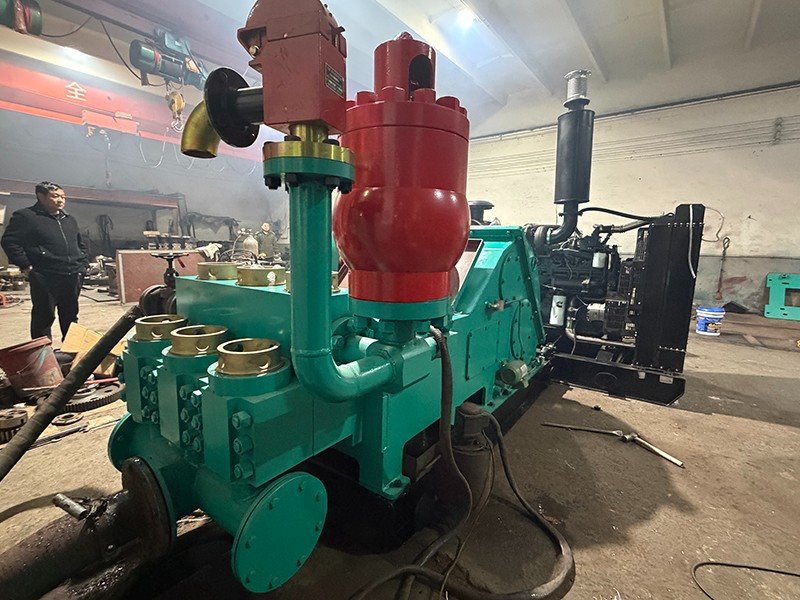
As a mud pump supplier, we offer a wide range of high - quality mud pumps to meet the diverse needs of our customers. Whether you need a Mud Pump with Diesel Engine for remote locations, a Heavy Duty Mud Pump for demanding applications, a Mud Pump Rig for drilling operations, a Reciprocating Mud Pump for efficient fluid transfer, or Rig Pumps for rig - related tasks, we have the right solution for you.
In addition to our mud pumps, we also provide expert advice on selecting the right belts and couplings for your specific application. Our team of experienced engineers can help you evaluate your power requirements, speed and torque needs, misalignment tolerance, environmental conditions, and maintenance requirements to ensure that you choose the most suitable belt or coupling for your mud pump.
Making the Right Choice
When it comes to selecting the right belt or coupling for your mud pump, it is important to do your research and consult with experts. Consider the factors mentioned above and choose a product that offers a balance between performance, reliability, and cost - effectiveness.
If you have any questions or need further assistance in selecting the right belt or coupling for your mud pump, or if you are interested in our mud pump products, please don't hesitate to contact us. Our dedicated sales team is ready to help you with your procurement needs and guide you through the selection process to ensure that you get the best solution for your application.
References
- "Mechanical Power Transmission Handbook" by Heinz P. Bloch
- "Pump Handbook" by Igor J. Karassik, Joseph P. Messina, Paul Cooper, and Charles C. Heald
- "Industrial Couplings: A Practical Guide" by John A. S. Smith